
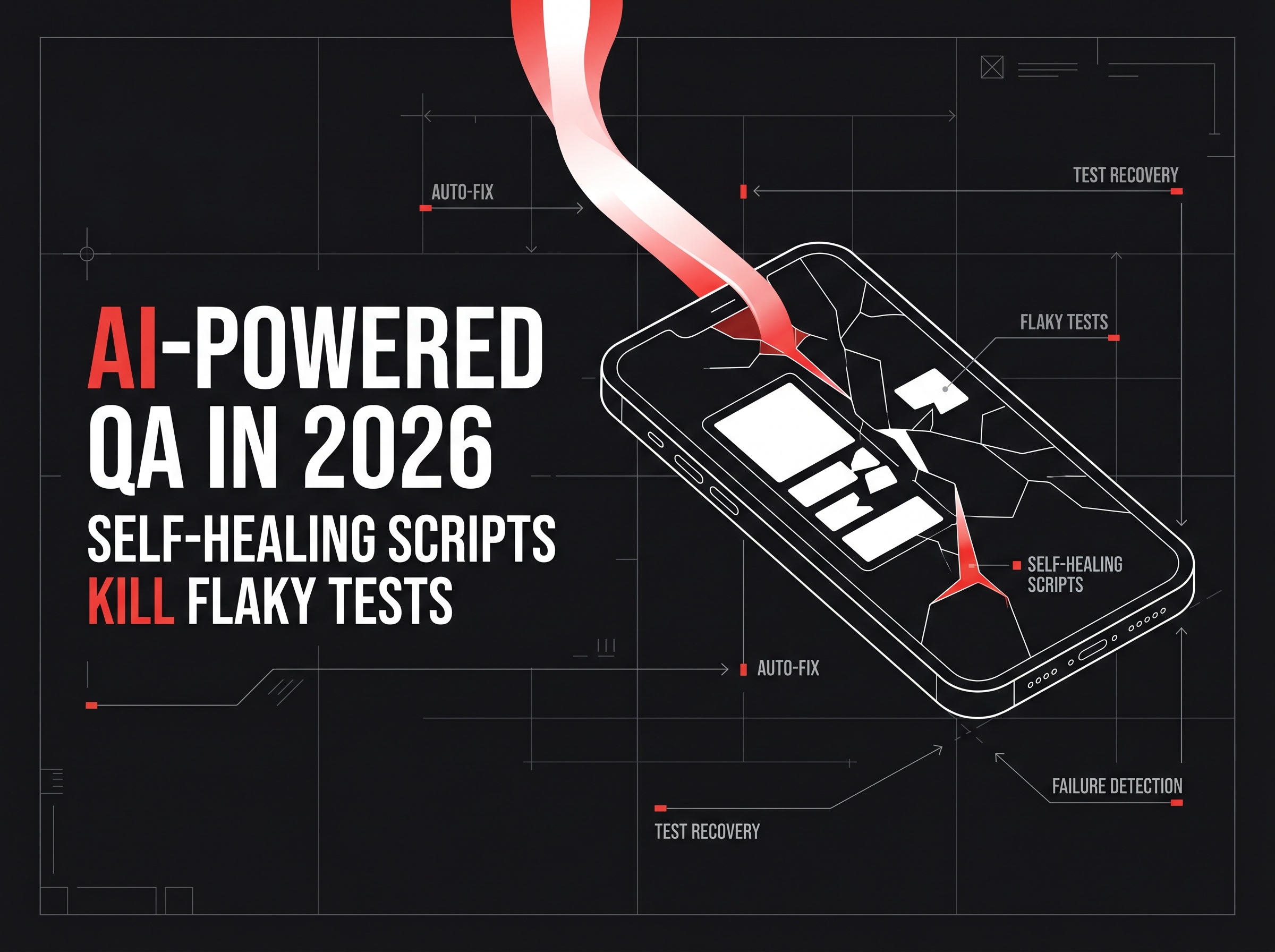
AI-Powered QA in 2026: How "Self-Healing" Scripts Are Killing Flaky Tests
"Tired of automated tests breaking every time you update your UI? Discover how AI-Powered Self-Healing Scripts and Autonomous Agents are revolutionizing QA in 2026, slashing maintenance time by 70%."
AI-Powered QA in 2026: How "Self-Healing" Scripts Are Killing Flaky Tests
If you are a CTO or Product Manager, you know the pain of "Flaky Tests."
You invest thousands of dollars building a robust automated testing suite. But the moment a developer changes a CSS class ID or moves a "Buy Now" button three pixels to the right, the entire test suite fails. Your team spends more time fixing the tests than fixing the actual software.
In 2026, the era of brittle, rigid automation is ending. The industry is shifting toward AI-Powered QA and Self-Healing Automation.
This isn't just a "nice to have." It is a fundamental shift in how we ensure software quality. By leveraging Generative AI, modern QA tools can now "see" your application like a human does, adapting to changes automatically without breaking the build.
💡 Key Takeaways
- The "Flakiness" Problem: Traditional automation relies on rigid code selectors (IDs). If the code changes, the test breaks.
- Self-Healing Tech: AI-powered tools (like Playwright with AI plugins or Applitools) detect when an element moves or changes attributes and "heal" the test script automatically in real-time.
- Visual AI: Beyond code, AI now uses Computer Vision to verify the look of the UI, catching visual bugs that standard code-based tests miss.
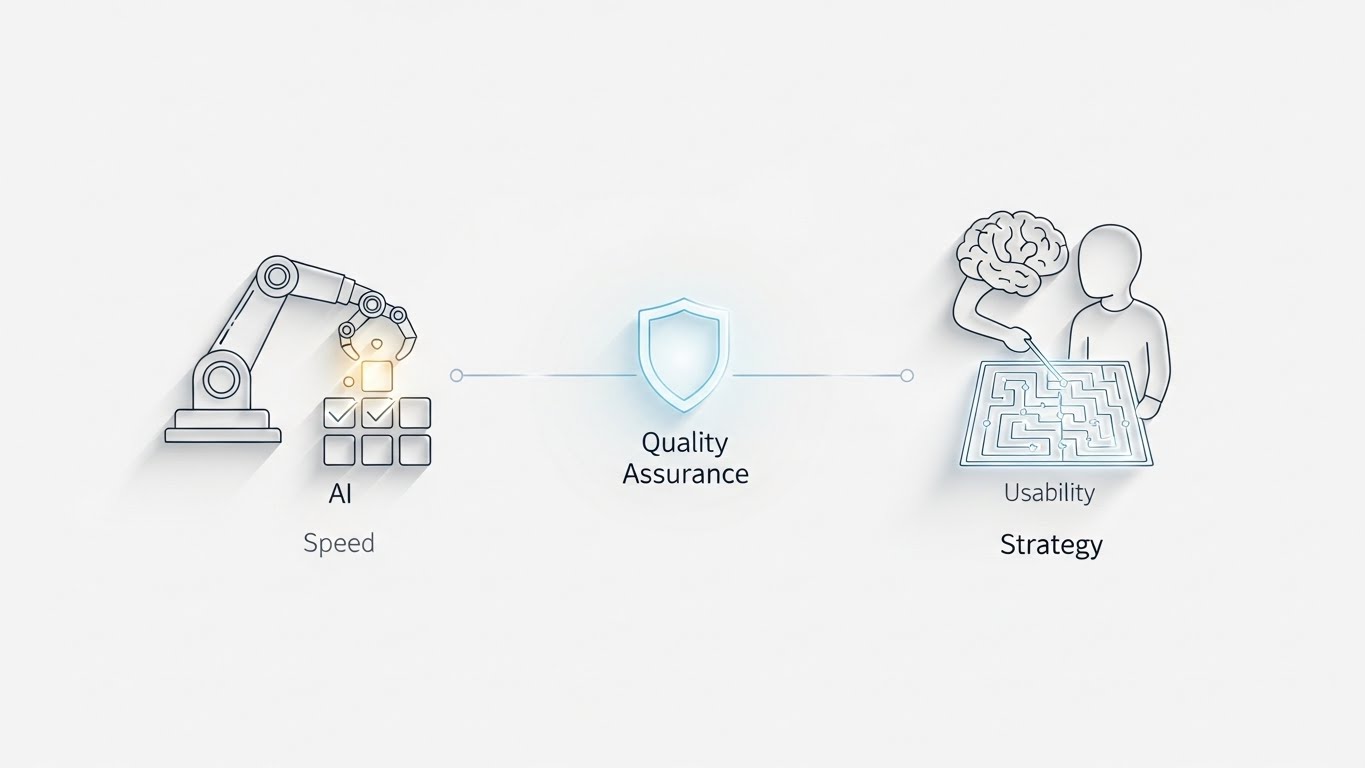
- The New Hybrid Role: AI handles the regression testing grunt work, freeing up human QA engineers to focus on complex Usability Testing and strategy.
The Death of Rigid Automation
For the last decade, automation scripts were "dumb." They followed strict instructions: Find the button with ID #submit-btn and click it.
If a developer changed that ID to #submit-button-v2, the script crashed. This fragility created a massive maintenance burden, often discouraging teams from automating fully.
Enter Self-Healing Automation. In 2026, AI-driven test agents don't just look for an ID. They look for context. They understand that the "Submit" button is the blue rectangular object with the text 'Submit' located near the bottom of the form.
If the ID changes, the AI analyzes the page, recognizes the button is still there (just with a new ID), clicks it, and updates the test script automatically.
Why "Visual AI" is the New Standard
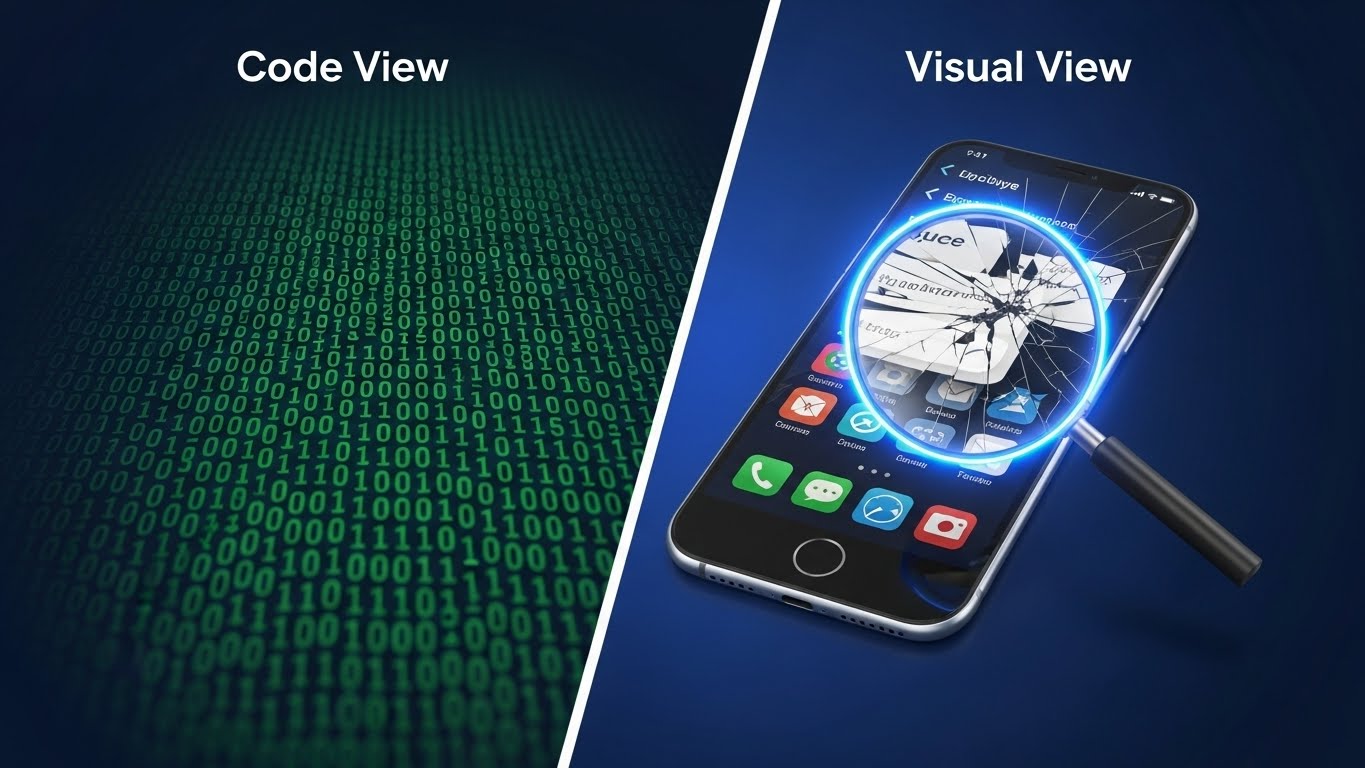
Code-based tests pass even if the UI looks terrible. A button might function perfectly (the code works), but it might be covered by a pop-up or rendered in invisible white text. A traditional script says "Pass." A user says "Broken."
Visual AI solves this. Tools powered by Computer Vision scan the visual rendering of the app. They catch:
- Overlapping text.
- Broken layouts on different screen sizes.
- Missing images.
- Color contrast issues.
This ensures you aren't just shipping "working code," but a "working experience."
Does This Replace Manual QA?
No. It elevates it.
AI is terrible at empathy. It can check if a login flow works, but it cannot tell you if the flow feels "frustrating" or "confusing."
By handing over the repetitive regression testing to AI agents, your human QA team shifts their focus to Exploratory Testing and UX Strategy. They become "Quality Architects" rather than "Test Executors."
How RockPaperRunway Guarantees Quality
We don't just find bugs; we prevent them. At ROCKPAPER RUNWAY, our QA methodology blends the speed of AI with the intuition of human experts.
- AI-Driven Automation: We implement self-healing test suites that run on every commit, ensuring your core features (Login, Checkout, Signup) never break.
- Visual Regression Testing: We use visual AI to catch layout shifts across iPhone, Android, and Desktop sizes instantly.
- Manual Exploratory Testing: Our senior QA engineers perform "destructive testing"—trying to break your app in creative ways that AI would never predict.
- Performance & Load Testing: We simulate thousands of AI users hitting your site at once to ensure your infrastructure holds up during Black Friday.
Stop shipping bugs to production. Upgrade your testing strategy to 2026 standards. Contact ROCKPAPER RUNWAY for a QA Audit and see how AI can reduce your testing cycles by 50%.
[Get Your QA Strategy Audit →]
Frequently Asked Questions (FAQ)
Q: Will AI replace manual testers? A: Not entirely. AI replaces the repetitive clicking and checking. It cannot replace the critical thinking required for complex user journeys, creative edge cases, and assessing the emotional "feel" of an application.
Q: What is "Self-Healing" in QA? A: Self-healing refers to automation scripts that can automatically detect when a UI element (like a button) has changed its technical attributes (ID, Class) and dynamically locate it using other properties, preventing the test from failing.
Q: Is AI testing expensive? A: The tools have a licensing cost, but they drastically reduce maintenance costs. Traditional automation requires hours of developer time every week to fix broken scripts. AI eliminates that time sink, resulting in a positive ROI within months.
Key Takeaways
- ✓The "Flakiness" Problem: Traditional automation relies on rigid code selectors (IDs). If the code changes, the test breaks.
- ✓Self-Healing Tech: AI-powered tools (like Playwright with AI plugins or Applitools) detect when an element moves or changes attributes and "heal" the test script automatically in real-time.
- ✓Visual AI: Beyond code, AI now uses Computer Vision to verify the look of the UI, catching visual bugs that standard code-based tests miss.
- ✓The New Hybrid Role: AI handles the regression testing grunt work, freeing up human QA engineers to focus on complex Usability Testing and strategy.

Discussion
Be the first to start the conversation.
Leave a Comment