
AI-Powered QA, Will Testing Become Fully Autonomous?
Explore how AI is transforming quality assurance. Learn current use cases, benefits, limitations, and whether fully autonomous testing is on the horizon.
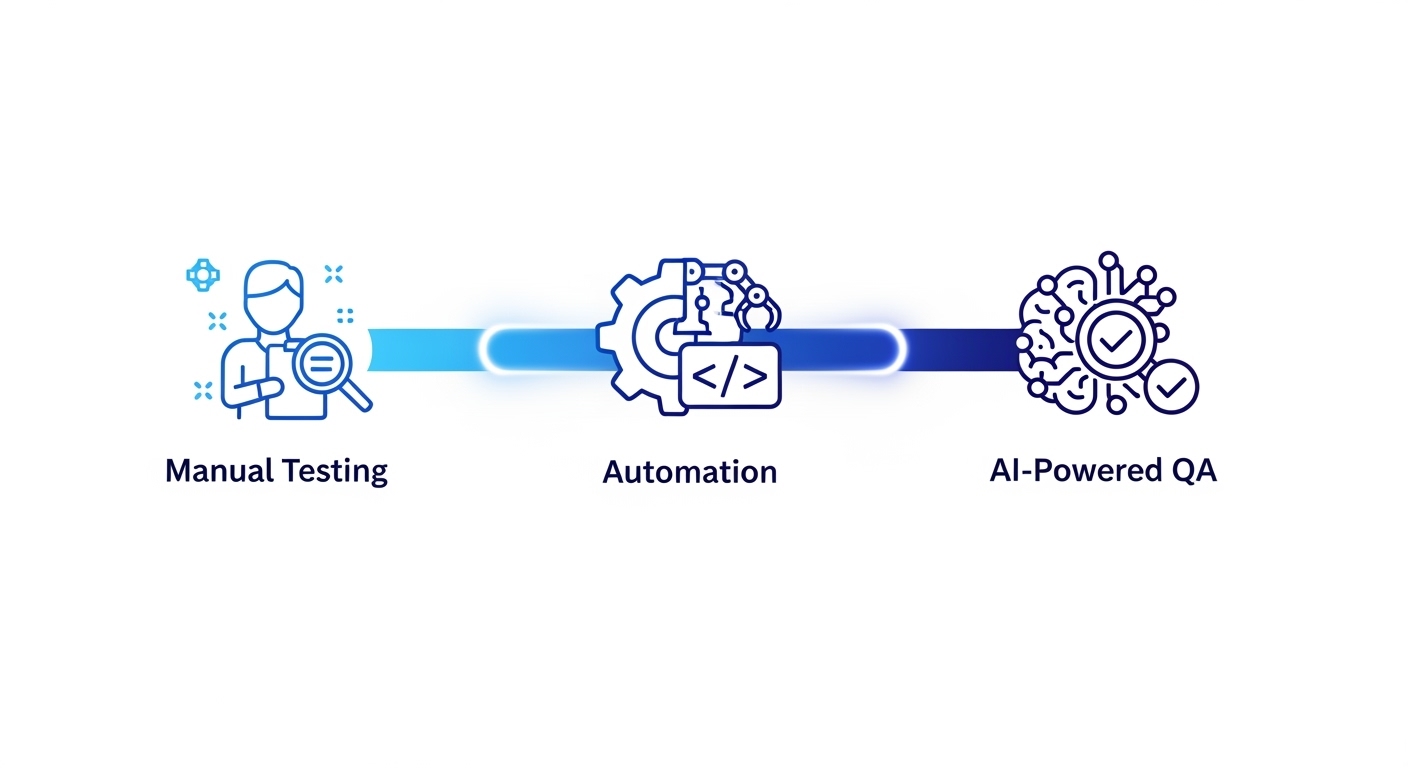
AI-Powered QA: Will Testing Become Fully Autonomous?
Quality assurance (QA) has evolved from manual checks to automation frameworks—and now, AI is entering the arena. In 2025, AI-powered QA is no longer theoretical. From self-healing test scripts to predictive defect analysis, AI is reshaping how engineering teams ensure quality at scale. But will testing ever become fully autonomous? Let’s break down where we are today, what’s possible, and where human expertise remains essential.
What AI-Powered QA Means Today
AI in QA isn’t just automation—it’s intelligence applied to testing. Current applications include:
- Self-Healing Tests: Tests adapt automatically to UI or API changes.
- Defect Prediction: AI models flag code areas most likely to fail.
- Intelligent Test Generation: AI creates test cases from requirements or code.
- Visual Testing: AI compares UI screenshots to detect layout anomalies.
Key Stat: According to Capgemini, 63% of organizations using AI in QA report faster release cycles.
Benefits of AI in QA
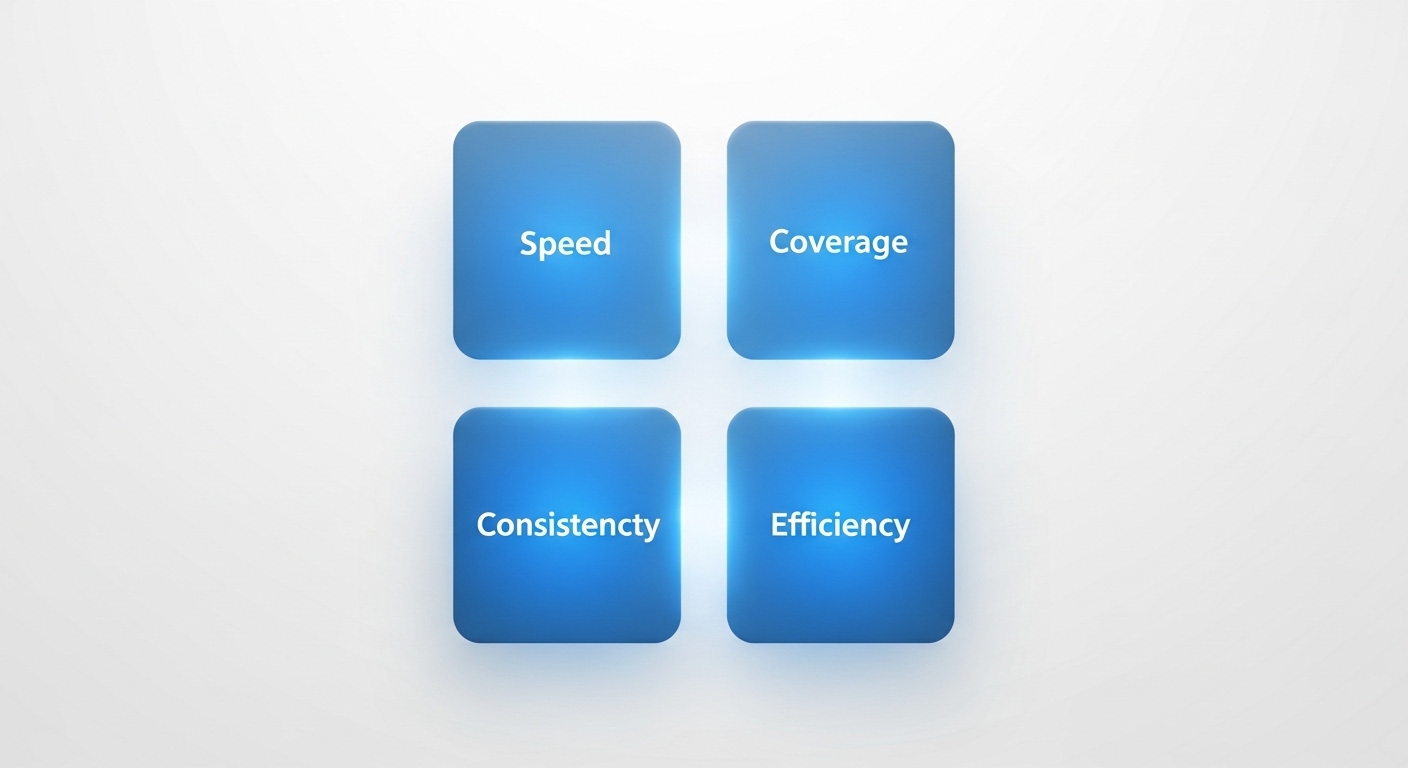
- Speed: Faster test execution and reduced cycle times.
- Coverage: AI can run more scenarios than human testers.
- Consistency: Reduces human error and bias.
- Efficiency: Identifies redundant test cases, saving resources.
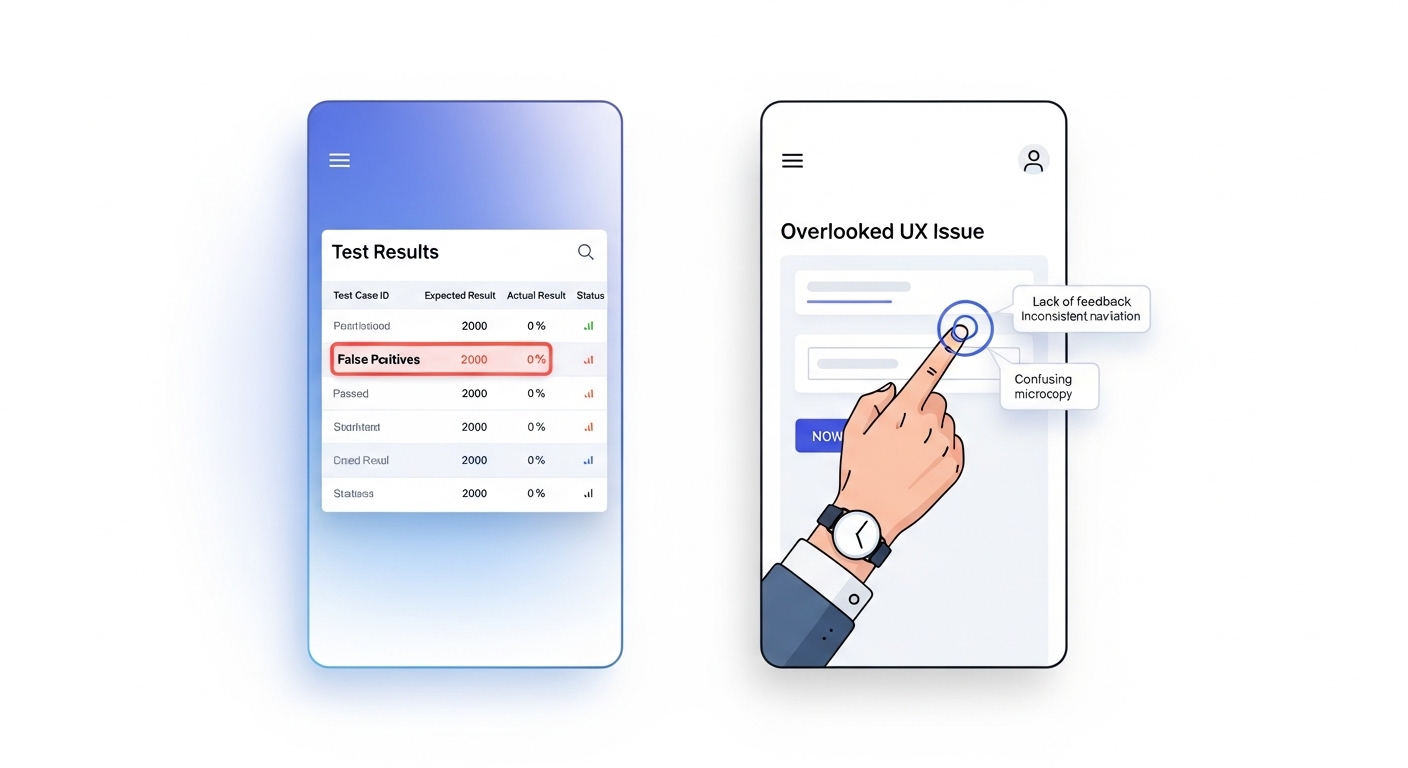
Limitations of AI in QA
- Context Blindness: AI struggles with subjective UX or usability issues.
- False Positives: Can generate noise without proper tuning.
- Data Dependency: Quality of results depends on training data.
- Human Oversight Required: AI lacks the intuition to assess edge cases.
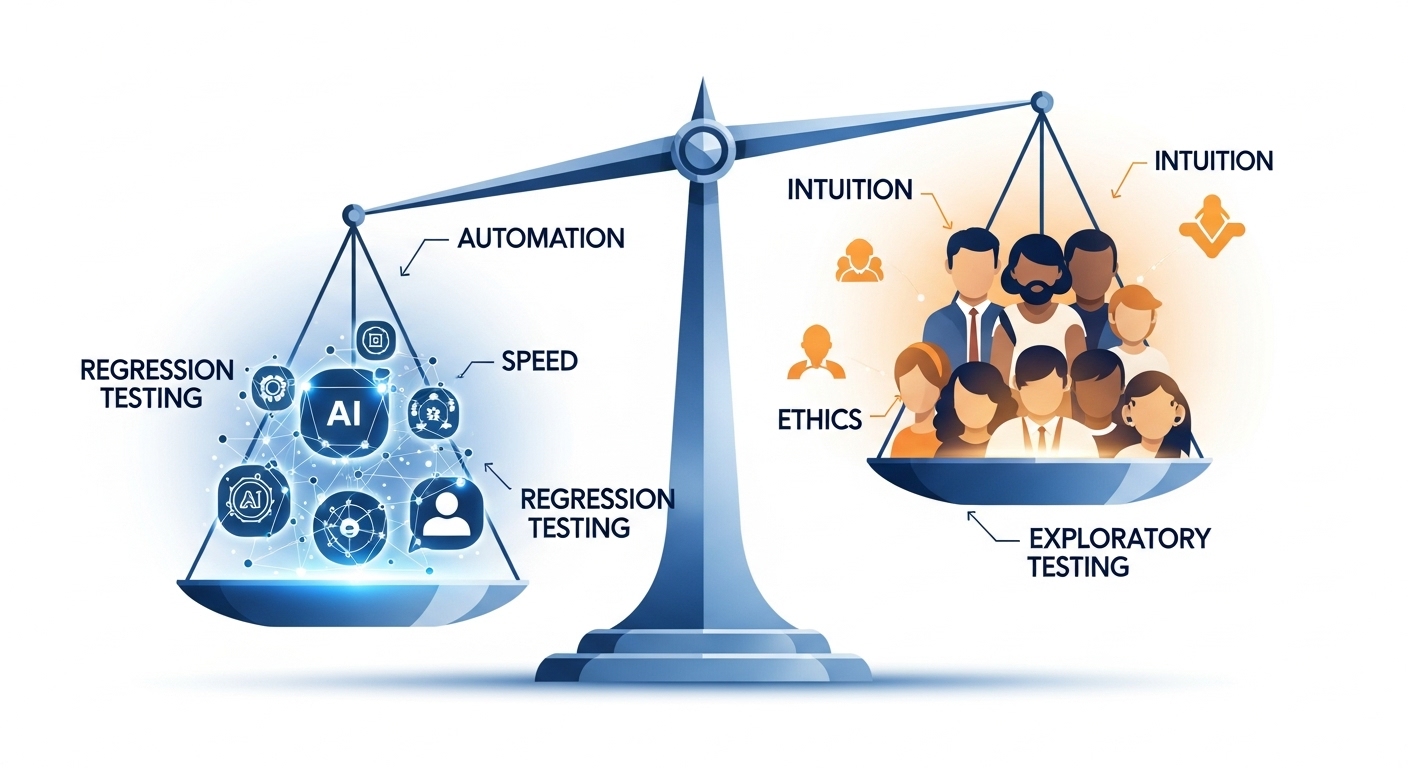
Strategic Framework: Where to Use AI vs. Humans
- AI is Best For: Regression testing, visual checks, performance testing, defect prediction.
- Humans Are Essential For: Exploratory testing, accessibility reviews, ethical edge cases, design validation.
- Hybrid Model Wins: Combining AI scale with human insight creates the most reliable QA process.
The Path to Fully Autonomous QA
- Short Term (2025–2027): AI augments automation, handling repetitive regression tasks.
- Medium Term (2028–2030): AI predicts defects, runs adaptive test suites, integrates with CI/CD pipelines.
- Long Term (2030+): Potential for autonomous QA agents, but human oversight will still be necessary for complex, ethical, and user-driven contexts.
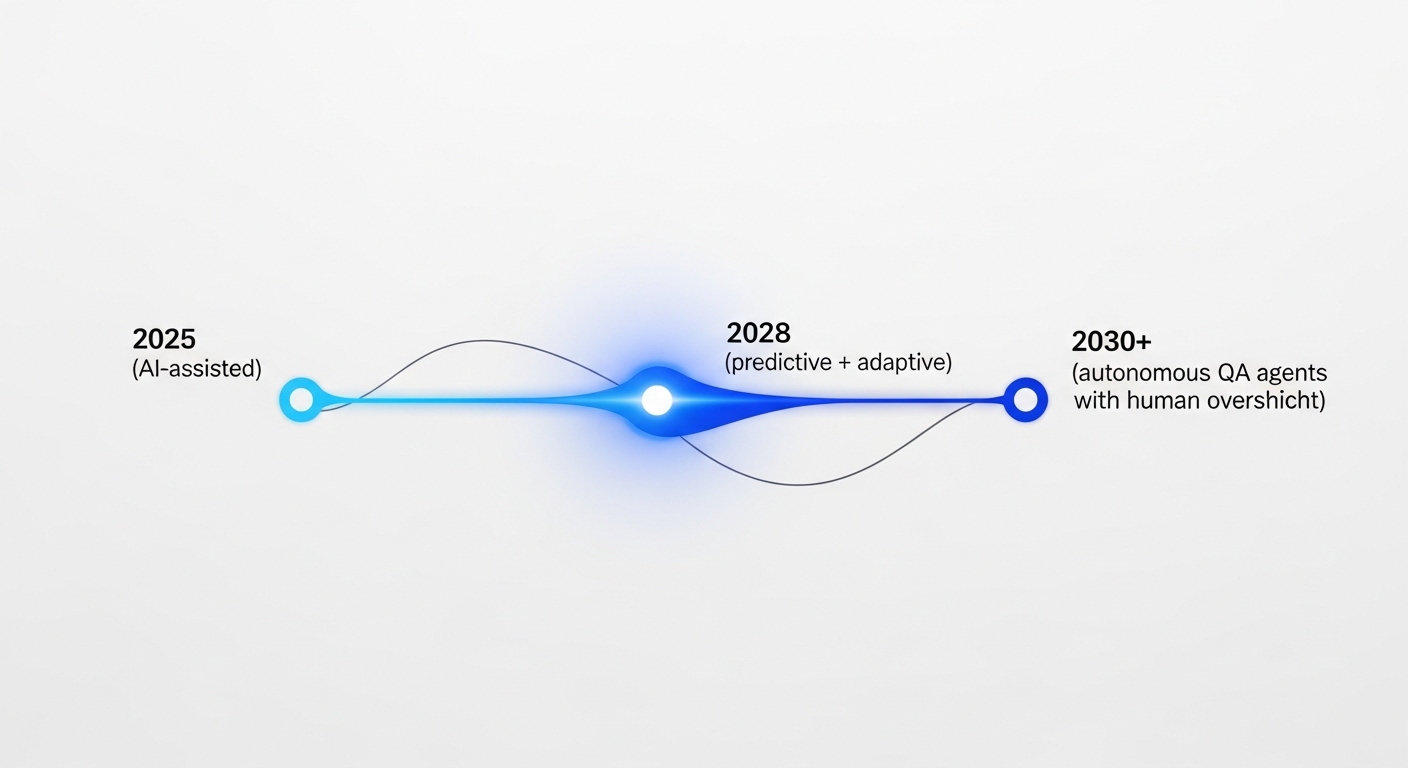
Key Insight: Fully autonomous QA may never replace humans entirely—it will serve as a powerful assistant, not a total substitute.
Pro Tip
💡 At ROCKPAPER RUNWAY, we help engineering leaders integrate AI-powered QA tools into their pipelines—balancing automation with human validation for maximum reliability and ROI.
Quick Reference: AI in QA
- Self-healing tests adapt automatically
- Predicts high-risk areas in code
- Boosts speed & coverage
- Still requires human judgment for usability & ethics
FAQ
Q: Can AI replace QA engineers?
A: No. AI augments QA but cannot replicate human intuition, creativity, or ethical judgment.
Q: What tools support AI-powered QA today?
A: Tools like Testim, Applitools, and Mabl lead in AI-assisted testing.
Q: What industries benefit most from AI in QA?
A: High-compliance sectors like fintech, healthcare, and eCommerce gain from AI’s ability to scale testing quickly and reliably.
Key Takeaways
- ✓AI is revolutionizing QA by accelerating testing, predicting defects, and scaling coverage. But full autonomy is unlikely—human oversight remains crucial to ensure quality, ethics, and user experience.
- ✓💡 At ROCKPAPER RUNWAY, we design hybrid QA strategies that blend AI efficiency with human expertise, helping teams deliver software that’s fast, reliable, and user-centered.
Discussion
Be the first to start the conversation.
Leave a Comment