
Why Your Next Website Will Redesign Itself for Every Visitor
"Static websites are becoming obsolete. Discover Generative UI (GenUI)—the AI technology that allows your website to redesign its own layout in real-time to match the specific needs of every single visitor."
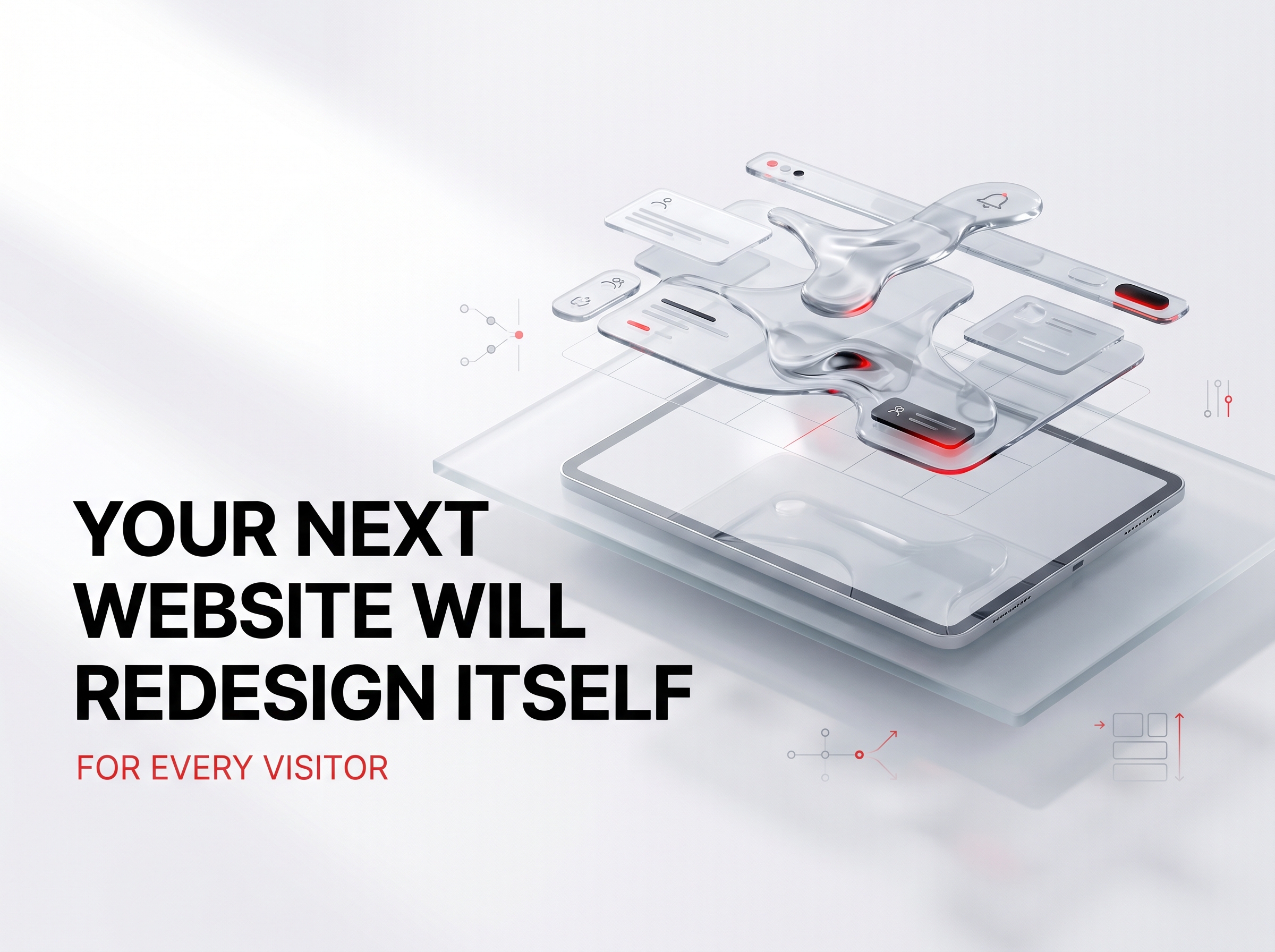
The Death of the Template: Why Your Next Website Will Redesign Itself for Every Visitor
For the last 15 years, web design has been static. You hire a designer. They draw a "Home Page." Developers code it. Whether the visitor is a 60-year-old CEO or a 19-year-old student, they see the exact same layout, the exact same button placement, and the exact same font size.
In 2026, this "One-Size-Fits-All" approach is becoming obsolete.
We are entering the era of Generative UI (GenUI). Driven by AI, modern interfaces are no longer pre-baked "pages." They are fluid systems that assemble themselves in real-time, adapting to the user's intent, device, and even their accessibility needs.
Imagine a website that doesn't just load, but reacts.
The Problem: The "One-Size-Fits-None" Internet
Current web design is a compromise. We design for the "Average User." But the "Average User" doesn't exist.
- User A is in a rush and just wants a "Buy" button.
- User B is skeptical and wants to read detailed reviews.
- User C is browsing on a dark train and needs "Dark Mode" with high contrast.
Currently, we force all three users to use the same interface. The result? Friction. User A gets annoyed by the clutter. User B can't find the data. User C hurts their eyes.
What is Generative UI (GenUI)?
Generative UI is the application of Large Language Models (LLMs) and Image Generators to the interface layer.
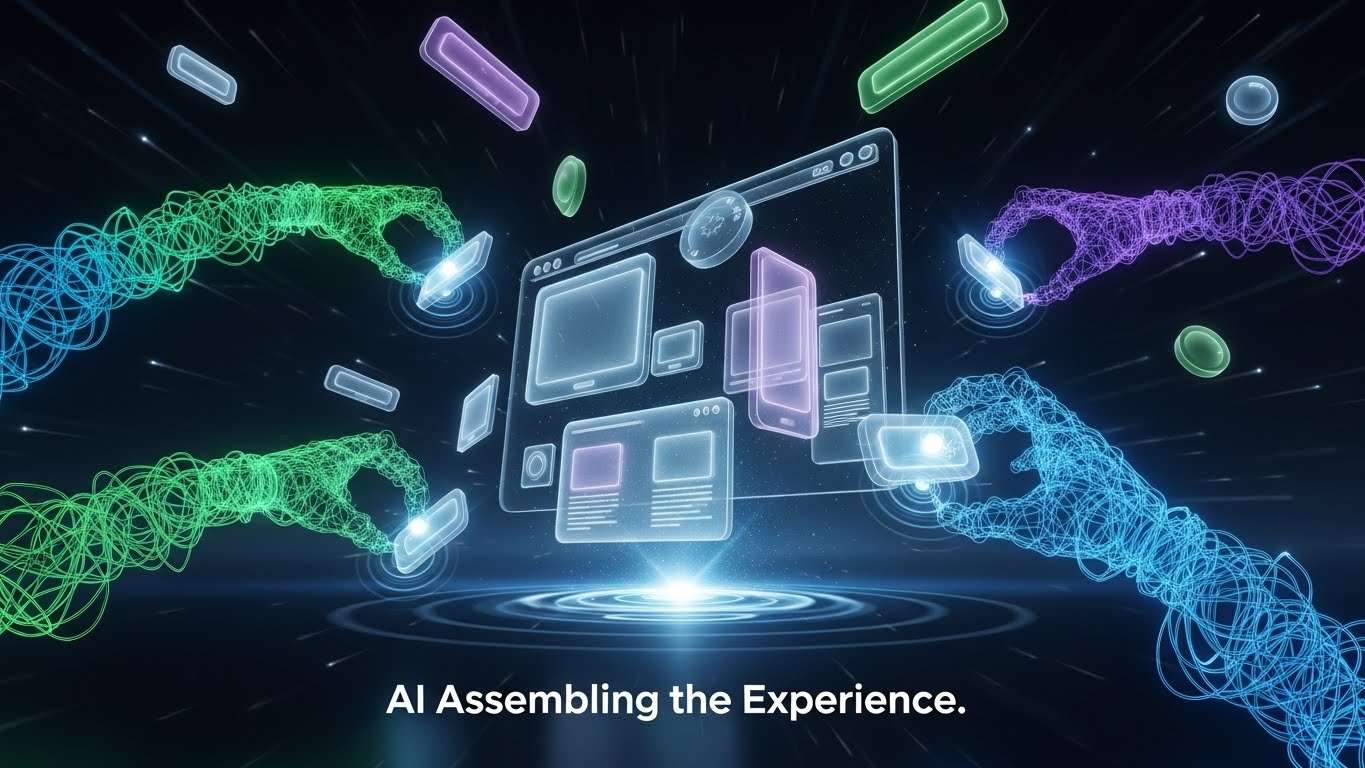
Instead of hard-coding a layout, we design a Design System (a kit of parts: buttons, cards, headers). The AI acts as the conductor. When a user arrives, the AI analyzes their data (past behavior, device, referral source) and draws the UI that is most likely to convert them.
How It Works: The "Liquid" Interface
This isn't sci-fi. It is happening now with tools like Vercel v0 and Galileo AI.
Scenario: You run an E-commerce store selling hiking gear.
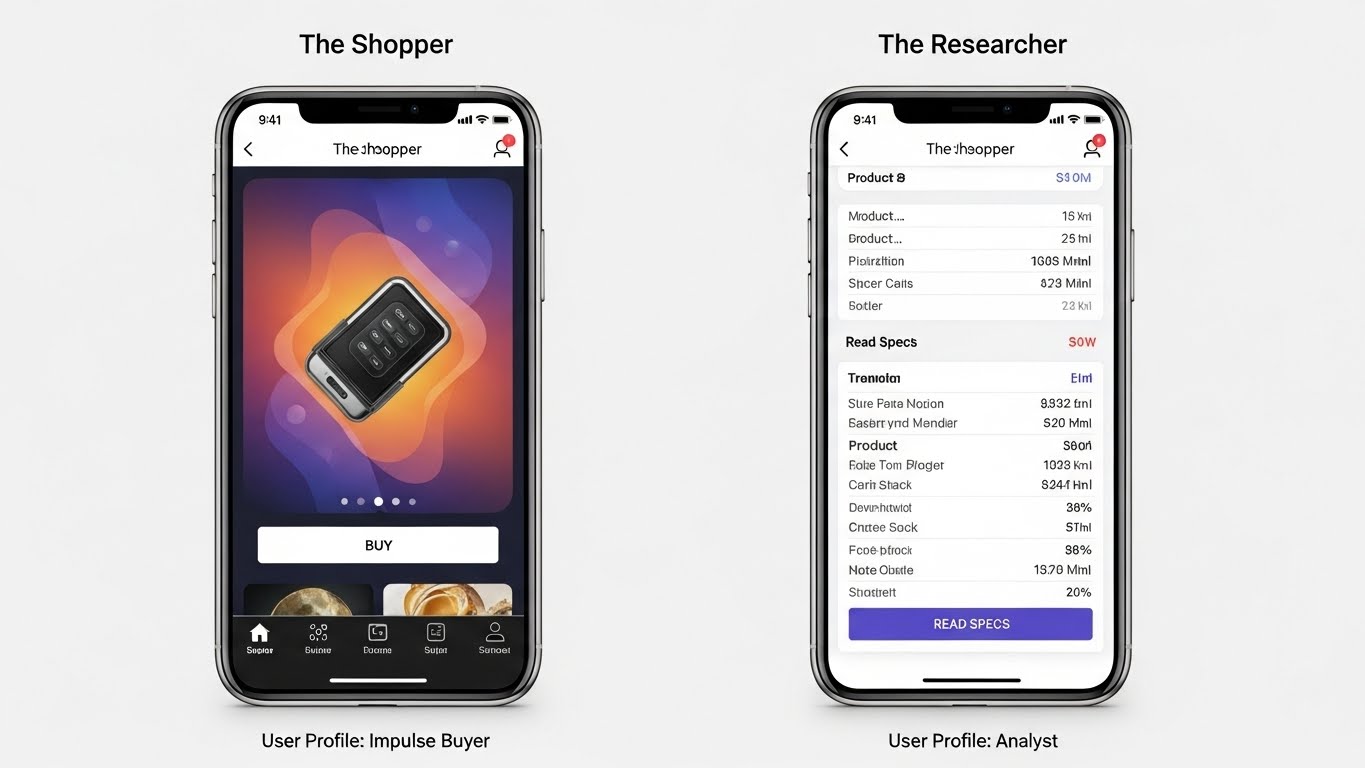
- Visitor: A 25-year-old who clicked an Instagram ad for "fast delivery."
- The GenUI: The AI generates a layout that prioritizes Visuals and a massive "Buy Now" button. The reviews are hidden behind a toggle. The color scheme is vibrant.
- Visitor: A 50-year-old searching for "safest hiking boots."
- The GenUI: The AI reshuffles the layout. It puts Technical Specs and Safety Reviews at the very top. It increases the font size. It creates a calm, trust-based color palette.
Same product. Two completely different websites. Zero human intervention.
The Business Case: Extreme Personalization
Why does this matter to a CFO? Conversion Rate.
Personalization used to mean "Hi [Name]." Now, it means "Here is the interface that matches your brain."
By reducing cognitive load and serving the user exactly what they want to see, GenUI drastically reduces bounce rates. It creates a feeling of "This site gets me."
How ROCKPAPER RUNWAY Designs for the Future
You can't just "turn on" GenUI. You have to design the system first.
At RockPaperRunway, we are moving away from "Page Design" and toward "System Design."
- Atomic Design: We build flexible components (Atoms) that AI can rearrange without breaking the brand.
- Guardrails: We set strict rules so the AI never creates an ugly layout.
- Data Integration: We ensure your customer data feeds the design engine securely.
The future is fluid. Don't build a monument that stands still. Build a living organism that evolves.
Is your UX stuck in 2020? Contact us for a UX/UI Audit. We will show you how to prepare your brand for the Generative future.
Frequently Asked Questions (FAQ)
Q: Will GenUI break my brand consistency? A: No, if done correctly. We establish "Brand Guardrails" (fonts, colors, spacing rules) that the AI cannot violate. The layout changes, but the Brand DNA remains locked.
Q: Is this expensive to build? A: Currently, it is an investment for forward-thinking brands. However, tools like Vercel v0 are democratizing the code generation aspect rapidly. The cost is in the strategy, not just the tech.
Q: Does this hurt SEO? A: It actually helps. Google ranks sites based on "User Signals" (time on site, clicks). If users love your adaptive interface, they stay longer, telling Google your site is high-quality.
Key Takeaways
- ✓Static is Dead: Pre-made templates convert poorly because they treat all users the same.
- ✓GenUI Defined: Generative UI uses AI to generate interface elements (buttons, layouts, text) on the fly based on who is looking at the screen.
- ✓Accessibility Wins: GenUI can automatically increase font size or contrast for visually impaired users without them asking.
- ✓The "Segment of One": Marketing's holy grail is treating every customer like a unique individual. GenUI makes this visually possible.
Discussion
Be the first to start the conversation.
Leave a Comment